Do ChatGPT and Gemini use the same sources?
An academic audit found ChatGPT and Gemini share only 5.4% of displayed source domains for the same query. See how to compare their answers.

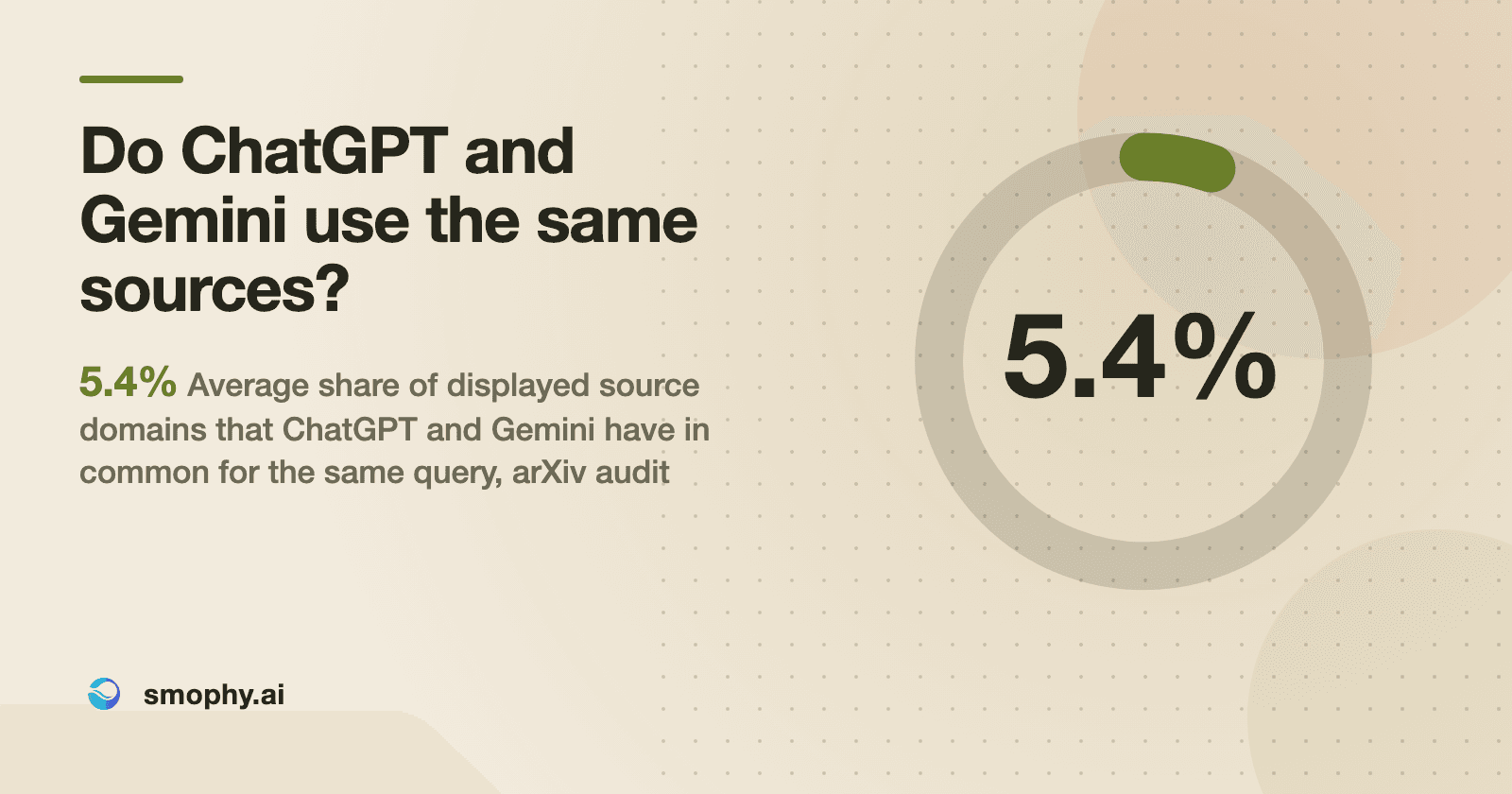
Rarely, according to an arXiv audit. The arXiv audit analyzed 1,536 chatbot responses and found that for the same query the ChatGPT and Gemini interfaces share only 5.4% of displayed source domains on average, and that in 76.7% of comparisons they had no domain in common. Two assistants can answer the same question and rest on different pages, so one answer is a starting point and a second model shows what the first one left out.
What did the audit find about sources?
ChatGPT and Gemini pointed to largely different websites, according to the arXiv audit.
The arXiv researchers collected 1,536 chatbot responses to product queries and compared the source domains each interface displayed. For the same query, ChatGPT and Gemini shared 5.4% of displayed source domains on average, and the arXiv audit found no domain in common in 76.7% of the comparisons. The paper is a preprint that has not yet been peer reviewed, and it studies product queries, so treat the figures as a strong signal about that setting and not a rule for every question.
The practical point is simple. When the sources differ, the evidence behind the answer differs, even when the wording of the answers sounds alike.
Why does it matter which sources an AI used?
Because you can only judge an answer by what it rests on.
The Stack Overflow 2026 Developer Survey found that 48% of respondents trust AI when they can easily validate the answers, and that only 16% extend that trust to most tasks that are not important work decisions. Validation needs a source you can open, and a source list that differs by model gives you more places to validate.
One assistant shows you one list. Two assistants show you two lists, and the pages that appear in both are a good place to start.
Do people already use more than one AI?
Yes, according to Menlo Ventures.
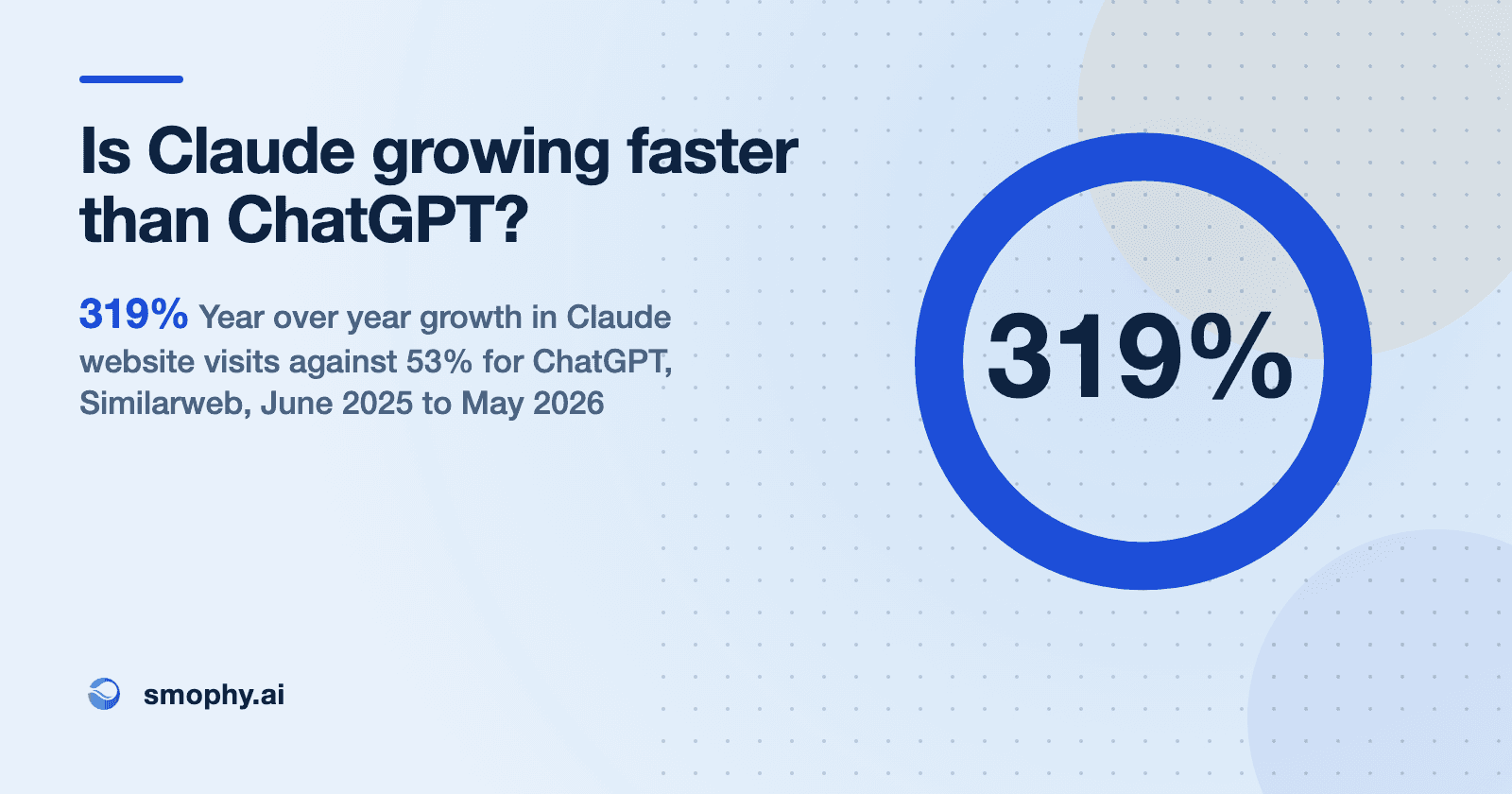
Menlo Ventures found that the average US AI user now uses 3.0 general AI assistants, up from 2.2 a year earlier. Andreessen Horowitz found that only 13% of users who pay for one AI product pay for even one other AI tool, so many people use several assistants and pay for one.
That leaves a gap. Someone who wants a second opinion has to open the other assistant by hand, and the two source lists then sit in separate windows.
What should you do when the sources do not overlap?
Treat the claims that appear on both lists as firmer, and check the claims that appear on only one.
Two assistants that point to different pages and agree on the answer give you more than a single confident answer. If they point to different pages and disagree, open each page and see which one fits your market, your date range and your situation. Where neither assistant names a source, treat the answer as an estimate and look for a source yourself before you repeat it.
How do you compare ChatGPT and Gemini answers properly?
Use identical wording, check the sources and mark where the answers differ.
- Write the question once. Include the facts the model needs, such as your market, your budget or the rule you are asking about, and leave out private details.
- Send the same text to both models in fresh chats. Identical wording means the only difference is the model.
- Ask each model for its sources. Add the line "Name the source for every number and every factual claim."
- List the sources side by side. Note which pages appear in both and which appear in only one.
- Open the pages that carry the decision. Check that each page says what the model says it says.
- Mark the differences. Each difference is a claim to check, not a result to pick.
- Keep the answer with its sources. Save the comparison so you can show where each fact came from.
What does the comparison cost with separate tabs?
Time, and it grows with every model you add.
Two models and one question mean two sign-ins, two pasted prompts and two windows to line up by hand. Six models mean six.
How does SmophyAI help you compare?
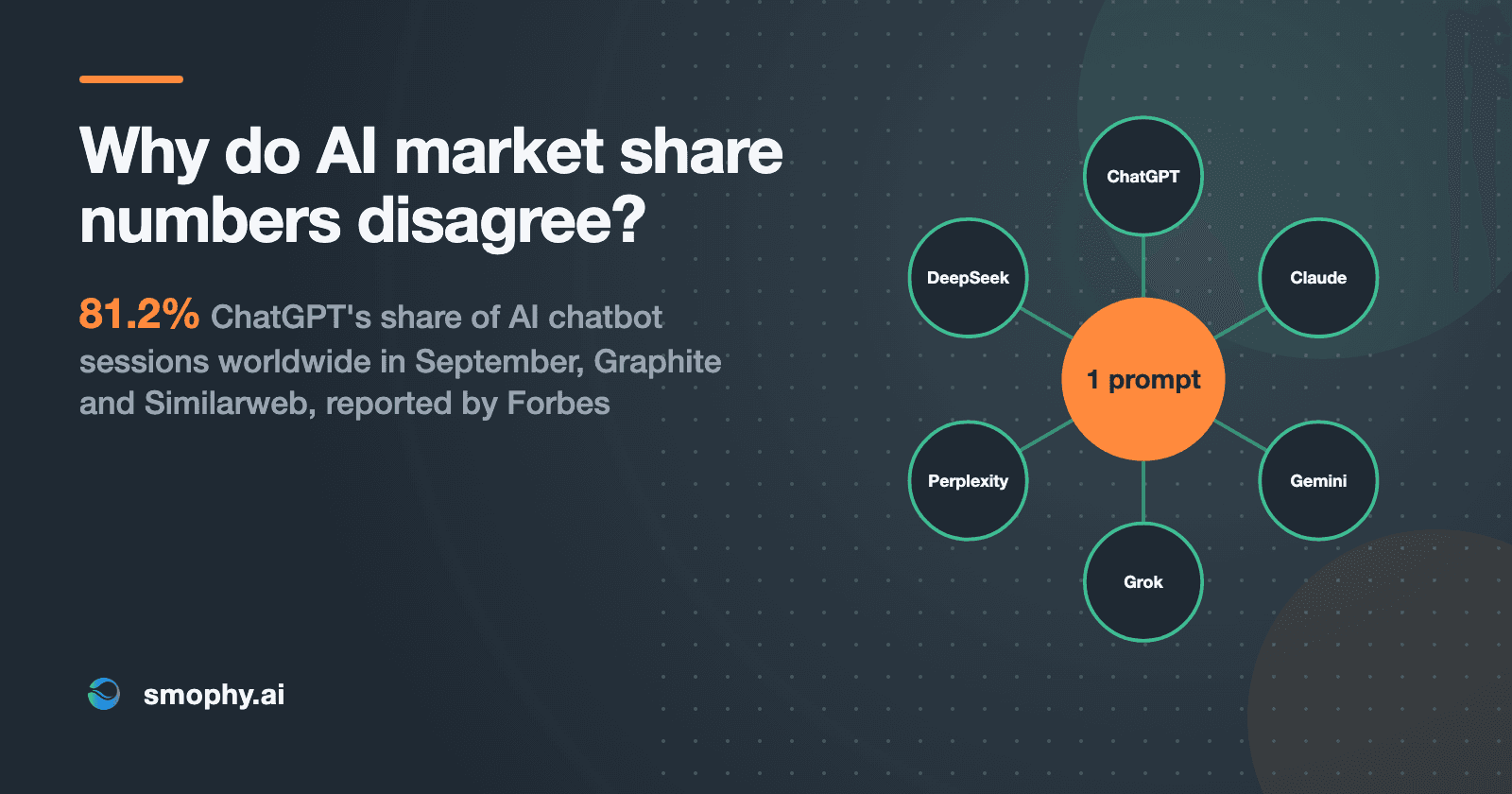
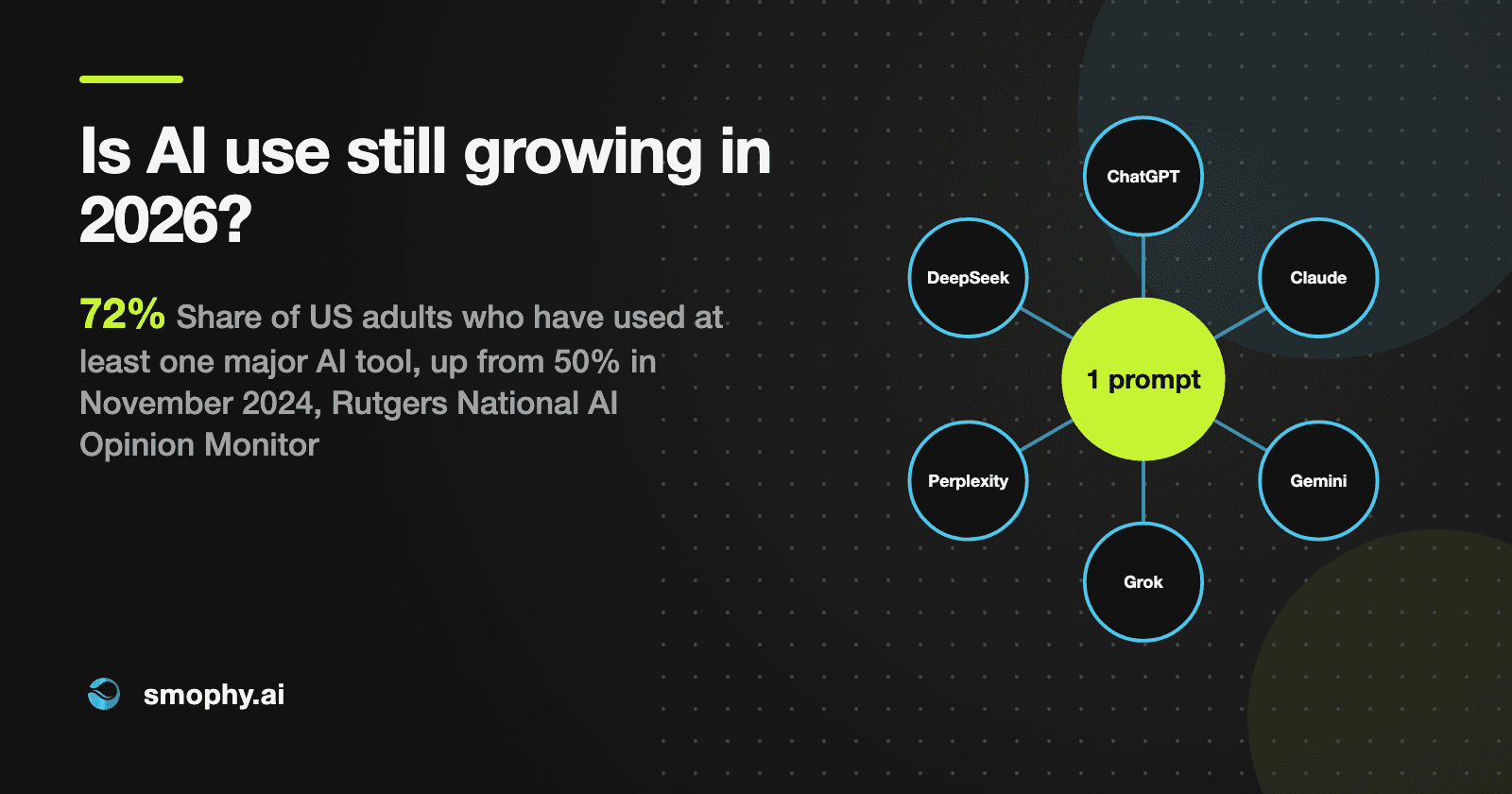
SmophyAI is an AI workspace where ChatGPT, Claude, Gemini, Grok, Perplexity and DeepSeek answer the same prompt side by side in one subscription.
Multi-Chat sends one prompt to all six models at once, with live web search on by default. You read the answers next to each other, ask each model to name its sources, open the pages behind the claims that differ and use Best Answer to combine the strongest information from the six responses into one draft. Chat export to PDF and DOCX saves the answers. You can start free and run your own question before you rely on any answer.
Common questions
Do ChatGPT and Gemini use the same sources?
Rarely, according to an arXiv audit of 1,536 chatbot responses. The arXiv audit found that for the same query the two interfaces shared 5.4% of displayed source domains on average, with no domain in common in 76.7% of comparisons.
Why do ChatGPT and Gemini give different answers?
The arXiv audit found that the displayed sources overlap very little for the same query, so the evidence shown behind each answer differs.
How much do people trust AI answers?
The Stack Overflow 2026 Developer Survey found that 48% of respondents trust AI when they can easily validate the answers, and only 16% extend that trust to most tasks that are not important work decisions.
How many AI assistants do people use?
Menlo Ventures found that the average US AI user now uses 3.0 general AI assistants, up from 2.2 a year earlier, and Andreessen Horowitz found that only 13% of users who pay for one AI product pay for even one other AI tool.
How can I compare AI answers without opening six tabs?
Send the same prompt to several models in one place and read the answers next to each other. In SmophyAI, Multi-Chat shows six models side by side.
Sources
About SmophyAI
SmophyAI is an AI workspace where ChatGPT, Claude, Gemini, Grok, Perplexity and DeepSeek answer the same prompt side by side in one subscription, with Best Answer, Smophy Mode routing and studios for images, video and writing. Try Multi-Chat
About the author.
Kamil Kępiński is the founder of Smophy Labs Inc. and builder of SmophyAI.