How many people pay for AI, and how much do they spend?
Parks Associates found 22% of US consumers use a paid generative AI tool; a16z data shows a $25 median. See what people pay and how to compare tools.

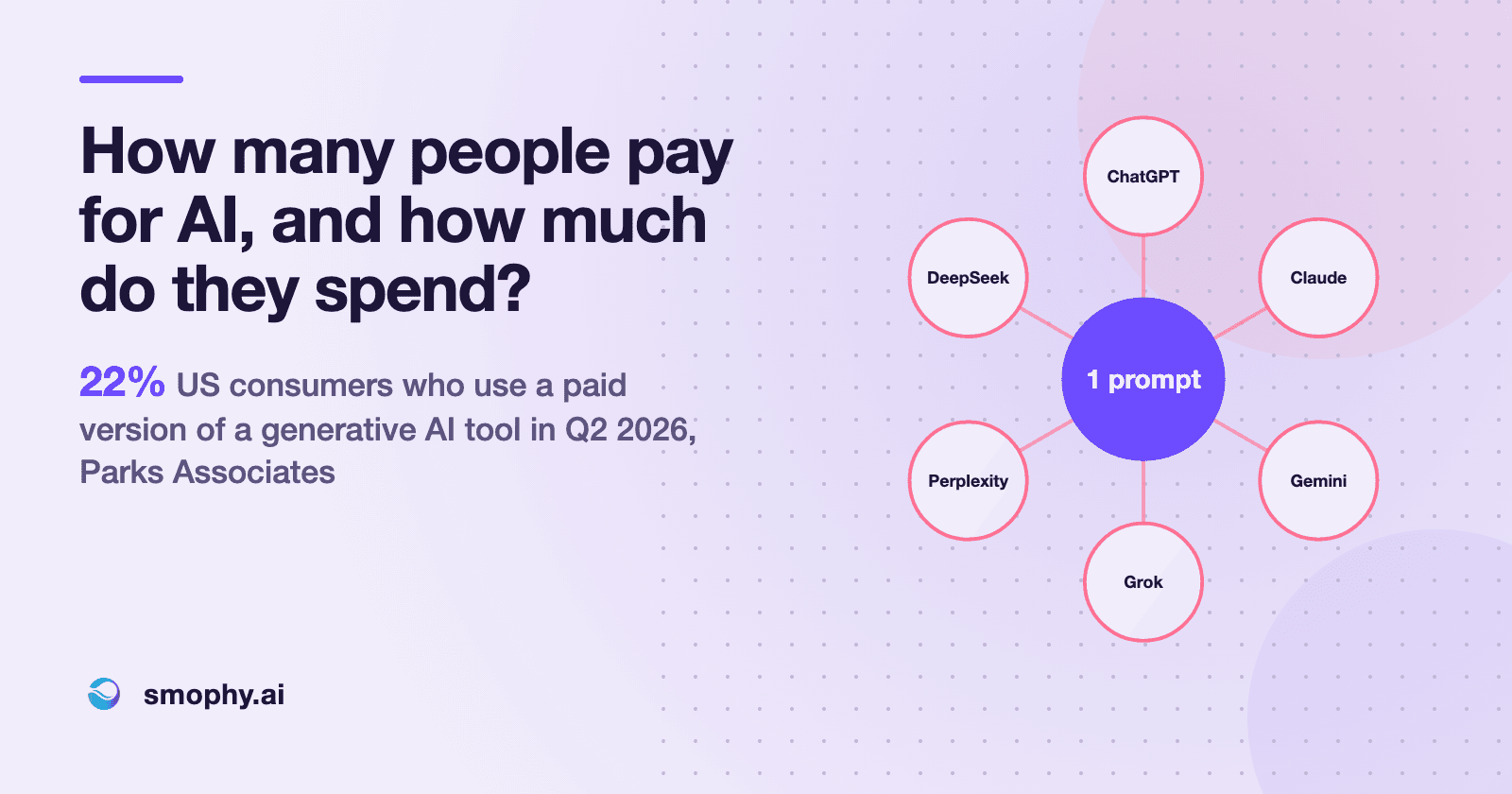
About one in five US consumers pays for a generative AI tool. Parks Associates found that 22% of consumers in US internet households reported using a paid version of a generative AI tool in the second quarter of 2026, up from 15% in the fourth quarter of 2024. The Neuron reported that an a16z study found the median spend among AI payers was $25 a month. The right question is how many subscriptions you need to cover your own work.
What share of people pay for AI?
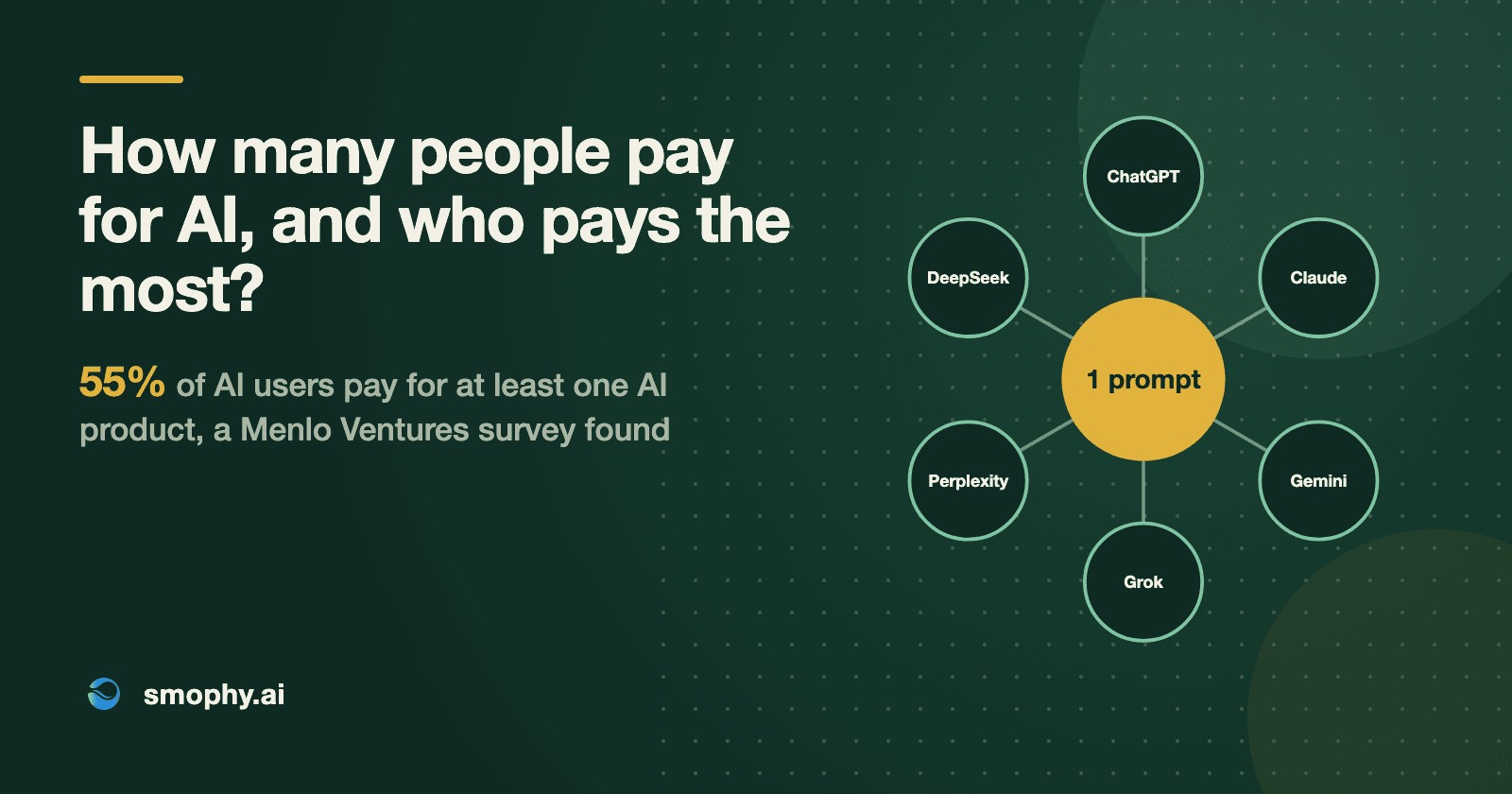
Between one in twenty and one in five, depending on what is counted.
Parks Associates found that 22% of consumers in US internet households used a paid version of a generative AI tool as of the second quarter of 2026, compared with 15% in the fourth quarter of 2024.
The Neuron reported that a16z's seventh Top 100 Gen AI Consumer Apps report found a lower number for a narrower group. Among eligible US consumers, 4.5% had an active paid personal subscription to ChatGPT, Gemini or Claude in August 2026, up from 2.1% a year earlier.
The two numbers differ because one counts any paid generative AI tool and the other counts personal subscriptions to three specific assistants.
How much do AI payers spend a month?
The median payer spends $25 a month according to The Neuron, and a small group spends far more.
According to The Neuron's report on the a16z study, the median spend among AI payers was $25 a month. The Neuron also reported that the top 1% of payers spent an average of $903 a month and accounted for 19.5% of observed consumer AI spending, so a small group carries a large share of the money. The a16z panel is based on US consumer card transactions from August 2026.
Picture a freelancer who pays for one chat assistant and one image tool. Two subscriptions already cover only two jobs, and a third tool for video or writing makes the monthly bill grow quickly.
Is paying for AI growing?
Yes, on every source above.
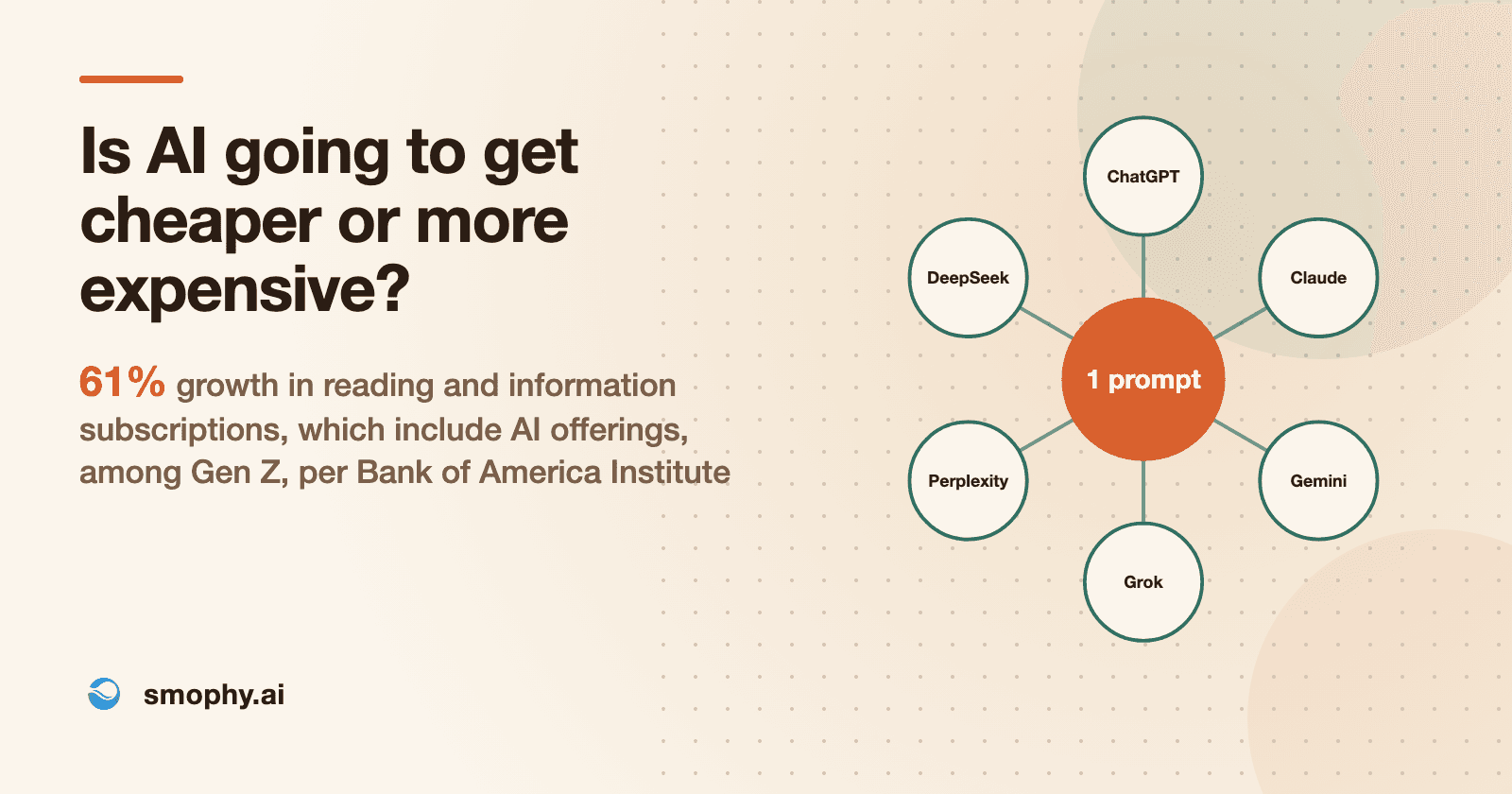
Parks Associates showed paid use rising from 15% to 22% in about a year and a half, and The Neuron reported the a16z measure rising from 2.1% to 4.5% in a year. Bank of America Institute found that reading and information subscriptions, which include AI-related offerings, posted the fastest growth across generations in July 2026, up 61% year over year among Gen Z and 51% among younger Millennials.
Growth in paid use means more people are asking the same question: is a second or third subscription worth it? Counting what you already pay each month, and what each tool gave you in return, is the first step before you add another one.
How do you decide what to pay for?
Start from the jobs you do every week, not from the tools.
- List the five tasks you give AI most often. Writing, research, coding, images and summaries are common ones.
- Run the same prompt on several models. Use identical wording so only the model changes.
- Read the answers side by side. Note which model gave the answer you would actually use.
- Count the subscriptions that earned a place. Any tool that nobody on your list needed is a cost, not a habit, and cancelling it is the easiest saving you can make.
- Repeat before every renewal. Models change, so the answer from last quarter can change too.
How does SmophyAI fit the question of what to pay for?
SmophyAI is an AI workspace where ChatGPT, Claude, Gemini, Grok, Perplexity and DeepSeek answer the same prompt side by side in one subscription.
Multi-Chat sends one prompt to all six chat models at once, so the comparison in step 3 takes one prompt instead of six tabs, and you can repeat it before every renewal without copying text between apps. Best Answer combines the strongest information from the six responses into one answer. The same plan includes Image Studio, Video Studio, Writing Studio and the AI presentation builder, and paid plans start at $19.98 a month. You can start free with a one time trial of 10 chat messages and 3 images.
Common questions
How many people pay for AI?
Parks Associates found that 22% of consumers in US internet households used a paid version of a generative AI tool in the second quarter of 2026. The narrower a16z measure reported by The Neuron found 4.5% of eligible US consumers paying personally for ChatGPT, Gemini or Claude in August 2026.
How much do people pay for AI each month?
The Neuron reported that the median AI payer spent $25 a month in the a16z study, while the top 1% of payers spent an average of $903 a month.
Is paying for AI worth it?
It is worth it when a tool saves more time than it costs on tasks you repeat. Test the same prompt on several models before you renew, and keep only the subscriptions that earn a place.
Why do the numbers on AI subscriptions differ?
Because each study counts a different group and a different set of tools. Parks Associates counts any paid generative AI tool, while the a16z measure counts personal subscriptions to ChatGPT, Gemini and Claude.
Can I compare several AI models without paying for each one?
Yes. In SmophyAI, Multi-Chat sends one prompt to six chat models side by side, and you can start free before you pay.
Sources
About SmophyAI
SmophyAI is an AI workspace where ChatGPT, Claude, Gemini, Grok, Perplexity and DeepSeek answer the same prompt side by side in one subscription, with Best Answer, Smophy Mode routing and studios for images, video and writing. Try Multi-Chat
About the author.
Kamil Kępiński is the founder of Smophy Labs Inc. and builder of SmophyAI.