Who doesn't use AI chatbots, and why?
Pew Research Center found 51% of US adults never use AI chatbots, and 54% of them cite privacy. Who stays out, why, and what could change that.

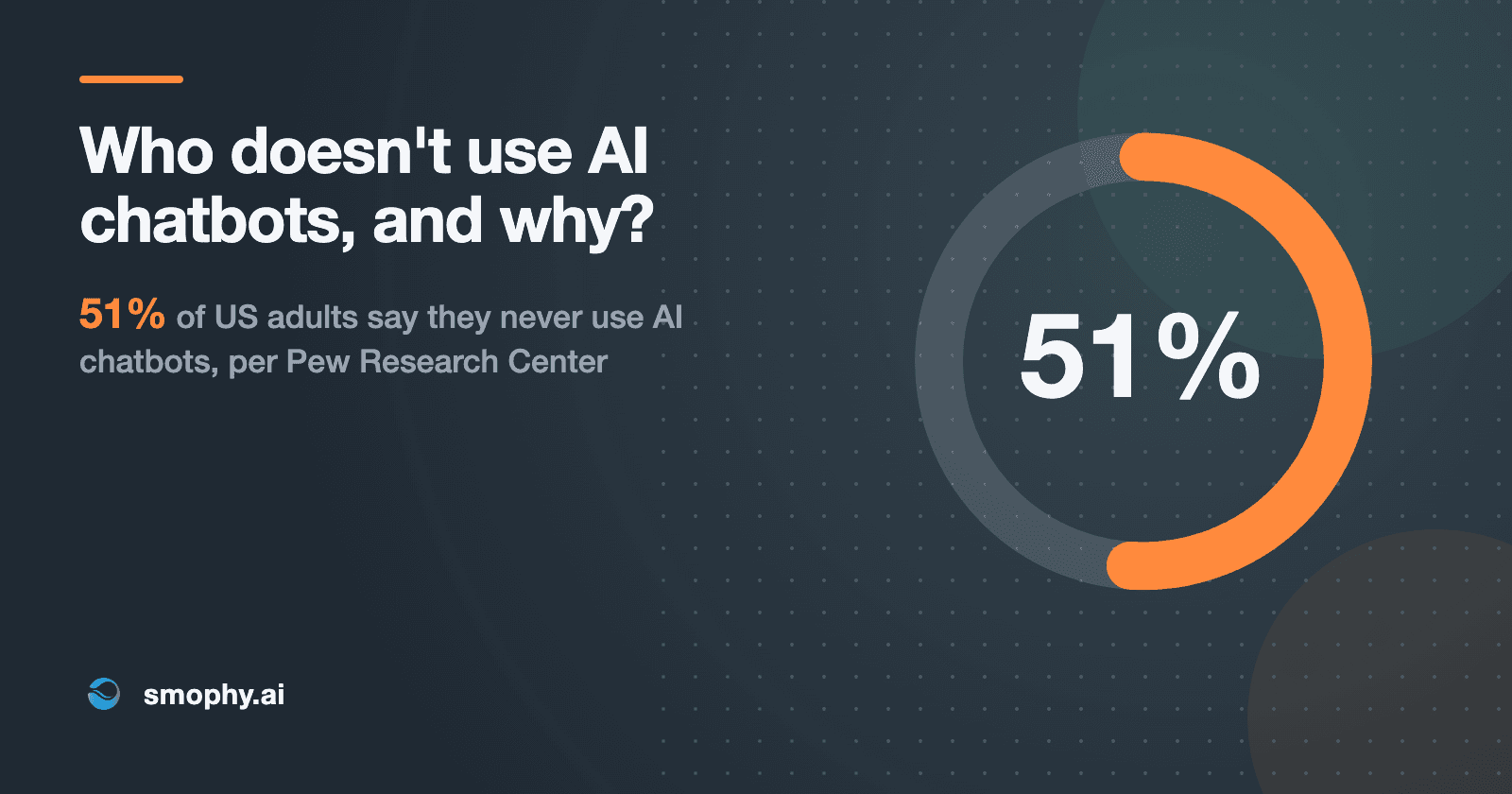
About half of US adults, and most of them say the reason is lack of interest, with privacy and accuracy close behind. Pew Research Center found that 51% of US adults never use an AI chatbot like ChatGPT, Gemini or Copilot. Pew Research Center also found that among those adults, 60% call lack of interest a major reason, 54% name privacy and 45% name doubts about accuracy. Most do not plan to start soon.
How many people still do not use AI chatbots?
About half of US adults.
Pew Research Center surveyed 5,119 US adults from Feb. 17 to 23, 2026. According to Pew Research Center, 51% of those adults say they never use an AI chatbot. The survey measured use, not how well any chatbot performs, and the adults who answered were describing their own habits.
Why do people say they do not use chatbots?
Lack of interest comes first, then privacy and accuracy.
Pew Research Center asked adults who never use chatbots to rate several possible reasons. For 60%, not being interested in using them is a major reason, Pew Research Center found. Concern about how their personal information will be used is a major reason for 54%, according to Pew Research Center. Pew Research Center also found that 45% do not trust the tools to give accurate information, and that 29% do not know how to use them.
Three of these reasons are about the tool rather than the person: privacy, accuracy and not knowing where to begin. They are the ones a product and a good first experience can address. Lack of interest is the one a product feature is least likely to address, and it is the reason given most often.
Will people who avoid chatbots start using them?
Most of them do not expect to.
In the same survey, Pew Research Center found that 67% of adults who never use chatbots say they are not too likely or not at all likely to start in the next 12 months. Pew Research Center reports that 40% of them say not at all. These adults are not waiting for a chatbot to arrive. If they start, it will be because a first try gave them a reason to trust it.
What makes a chatbot easier to trust and start with?
Begin with a question you can check yourself.
- Pick a question whose answer you already know. Think of a recipe you cooked, a trip you took or a fact about your work: it shows quickly how reliable an answer is.
- Ask the same question to a second model. If two answers agree, you can lean on them more. If they differ, you know which line to check.
- Ask where the answer comes from. Request the page or study behind each claim and open it yourself.
- Keep private details out. Use general descriptions instead of names, numbers and addresses until you are comfortable.
- Use it for a draft, not a final decision. Let the chatbot prepare a list, a summary or a first version, and make the decision yourself.
- Add one use at a time. Try a shopping comparison or a letter you were putting off.
These steps map to the reasons above. Checking the answer speaks to accuracy. Deciding what to share speaks to privacy. Starting small speaks to not knowing how.
What should a first question look like?
Choose something with a short, checkable answer and a real use for you.
Good first questions are ones where you can tell quickly whether the reply is right. Ask for a summary of a letter you have already read, a comparison of two products you know, or a plan for a trip you have taken before. You will see where the chatbot is accurate, where it is vague and where it makes something up, and you learn how much to lean on it before you ask something that matters.
Questions about your health, money or legal situation deserve a second opinion from a professional, whichever chatbot you use. Chatbots can help you prepare for that conversation by explaining terms and listing questions to ask, but it should not replace it.
What if you worry about privacy?
Share less, and look at what the tool says about your data.
Privacy was a major reason for a large part of the adults Pew Research Center asked, and the answer is partly habit. Write prompts the way you would write to a stranger: describe the situation without names, addresses, account numbers or documents. Read the settings of the tool you use and see whether your conversations are kept and for what. If a question needs private details to be answered, that question is better kept for a person you trust.
How does SmophyAI help new users start?
SmophyAI is an AI workspace where ChatGPT, Claude, Gemini, Grok, Perplexity and DeepSeek answer the same prompt side by side in one subscription.
Multi-Chat sends one prompt to all six models at once, so the second-model check in the steps above takes one prompt instead of six tabs and logins. You read the answers next to each other and see where they agree and where they differ. That makes accuracy something you can see rather than take on trust. You can start free with your own question.
Common questions
How many Americans never use AI chatbots?
About half. Pew Research Center found that 51% of US adults say they never use AI chatbots like ChatGPT, Gemini or Copilot.
Why don't people use AI chatbots?
Lack of interest first, then privacy and accuracy. Among adults who never use them, Pew Research Center found that 60% call lack of interest a major reason, 54% privacy concerns and 45% doubts about accuracy.
Will people who avoid chatbots start using them?
Most do not expect to. Pew Research Center found that 67% of adults who never use chatbots say they are unlikely to start in the next 12 months.
Is it safe to ask a chatbot personal questions?
Share less. Describe your situation without names, addresses or account numbers, and keep health, money and legal decisions for a professional.
How can I start using an AI chatbot safely?
Begin with a question you can check, ask a second model the same thing and keep private details out. In SmophyAI, Multi-Chat sends one prompt to six models and shows the answers side by side.
Sources
About SmophyAI
SmophyAI is an AI workspace where ChatGPT, Claude, Gemini, Grok, Perplexity and DeepSeek answer the same prompt side by side in one subscription, with Best Answer, Smophy Mode routing and studios for images, video and writing. Try Multi-Chat
About the author.
Kamil Kępiński is the founder of Smophy Labs Inc. and builder of SmophyAI.